

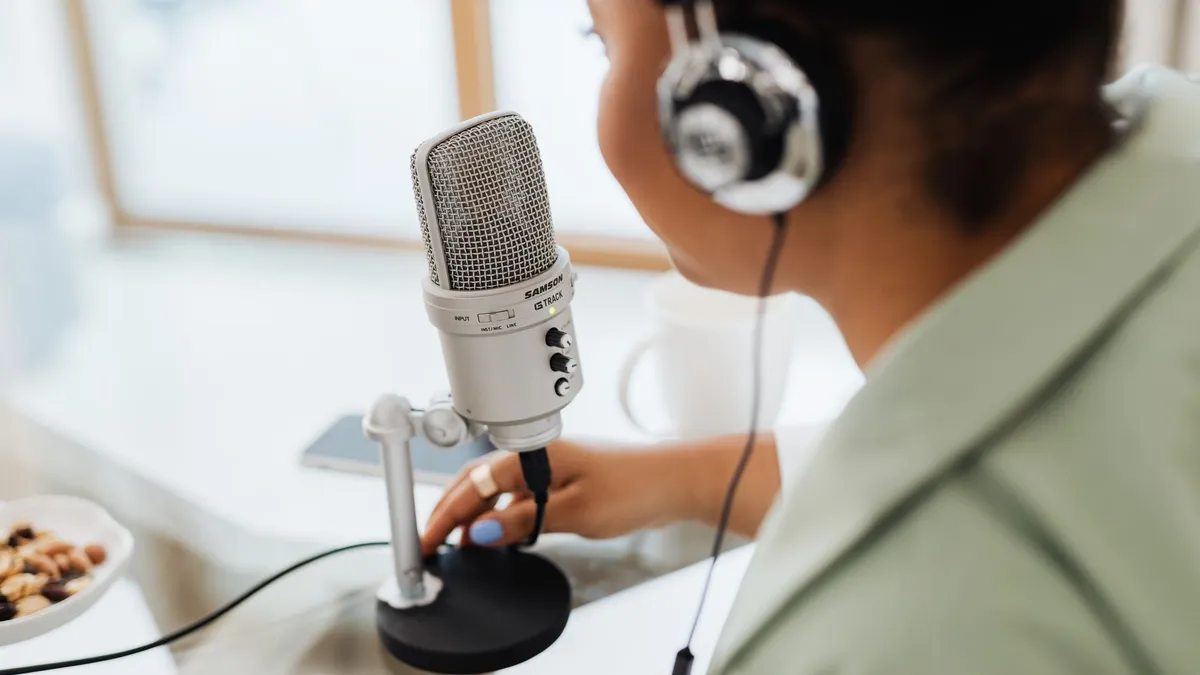
Recording an episode takes an hour. Everything that happens after you stop recording can take six.
Show notes, audio cleanup, transcription, guest follow-up, social clips, platform uploads. Most podcasters are doing all of it themselves, which means the creative work competes for the same calendar as the operational work. One of them loses. Usually it is the podcast.
A podcast virtual assistant takes the production half off your plate. The recording stays yours. The six hours of process that surrounds it does not have to be.
This guide covers exactly what a podcast VA handles, how to hand work off in the right order, and what an AI-trained VA does differently from a general hire.
What Does a Podcast Virtual Assistant Handle?
A podcast virtual assistant is a remote professional who manages the production, publishing, and promotion tasks that surround each episode. They do not write the host's content or make editorial decisions, but they own every repeatable process that moves an episode from raw recording to live, promoted, and indexed.
The work falls into six core areas.
Show Notes and Episode SEO
Show notes are the most valuable task most podcasters are still doing themselves. A podcast VA takes your episode transcript or a rough outline, writes a structured summary with key timestamps, pulls the memorable quotes, writes the SEO-optimized episode description, and builds the listening page copy. Done well, show notes turn a single recording into searchable content that attracts listeners for months after the episode drops.
A good podcast VA writes show notes that read like they came from the host, because they are based entirely on what the host said. They learn the show's format and voice in the first one or two episodes, and the iteration cycle gets short quickly.
Audio Editing and Cleanup
Basic audio editing takes most hosts 2-3 hours per episode. Removing long pauses, filler words, background noise, and technical glitches is tedious and does not require your judgment. It requires attention and the right tools.
A podcast VA handles this by running the audio through cleanup tools first, then doing a manual pass to catch whatever the automated process misses. The result is a clean, listenable file without you sitting in front of a waveform editor for half an afternoon. For interview-format shows with moderate editing needs, most VAs can turn a raw recording into a publication-ready file within a few hours.
Transcription
Full transcripts support accessibility, search visibility, and repurposing. Your VA runs the audio through an AI transcription tool, corrects the output for accuracy, and delivers a formatted transcript you can publish alongside the episode, quote in newsletters, or turn into a blog post. Transcription is one of the fastest tasks to hand off because the output is easy to QA and errors are straightforward to flag.
Guest Coordination and Scheduling
Guest-driven shows involve a lot of logistics: outreach emails, availability checks, calendar invites, pre-interview prep documents, technical setup instructions, post-episode thank-you notes, and social tagging when the episode goes live. Each of those touchpoints is time on your calendar.
A podcast VA owns the entire guest coordination thread. You show up to the recording with a prep document already in your inbox, having sent zero of those emails yourself. You confirm the guest; the VA handles everything else.
Social Media Clips and Promotion
Turning an episode into social content means pulling the strongest 30-60 second clips, writing captions tailored to each platform, adding subtitles for accessibility, and scheduling the posts. That is its own workflow, and it is the one most podcasters skip entirely because they run out of time after publishing.
A VA who handles promotion ensures each episode keeps generating reach after it goes live. For shows building an audience, this is often where the compounding value shows up.
Publishing and Distribution
Uploading the final file, writing the metadata, setting the episode title and description, scheduling the release date, confirming the feed is live across Spotify, Apple Podcasts, Amazon Music, and any other platforms. These are repeatable checklist tasks. None of them require your judgment. All of them eat time.
Your VA runs the publishing checklist so the episode goes live correctly, every time, without you touching the backend of your hosting platform.
The Pre-Production Work You Are Probably Doing Yourself
Most podcast VA guides focus on post-production. But the work before you hit record is also delegable, and handing it off creates a cleaner recording session because you walk in prepared.
| Pre-Production Task | What the VA Does |
|---|---|
| Guest research | Reviews the guest's background, recent work, and relevant talking points before the interview |
| Question prep | Builds a draft question set based on the episode topic for the host to review and edit |
| Episode calendar management | Maintains the release schedule, flags gaps, and tracks recording dates |
| Listener Q&A collection | Pulls listener questions from social and email for Q&A-format episodes |
| Sponsor coordination | Tracks ad read specs and delivery deadlines for any sponsorship commitments |
| Show asset management | Organizes artwork, music files, and templates so production is consistent across episodes |
When these tasks are off your plate, a recording session starts with clarity instead of scramble. Most hosts who add pre-production support to their VA's scope say the quality of the conversation improves because they arrive more prepared.
How an AI-Trained Podcast VA Works Faster
A general VA can handle podcast tasks. An AI-trained VA handles the same tasks faster and with fewer revision rounds, because they have trained on specific tools for each step of the production workflow. The practical difference shows up in turnaround time and how little hand-holding the VA needs after the first episode.
Every assistant placed through Delegated AI graduates from the Delegated AI Academy, where VAs are trained on practical AI workflows and tested on real tasks before they meet a client. For podcast production, that training shows up in specific ways.
Transcription and show notes. An AI-trained VA uses tools like Descript or Riverside's built-in transcription to generate an accurate first draft in minutes. They clean it, structure it, and deliver show notes that match the host's voice without the host needing to outline anything. A general VA doing this manually takes two to three times as long for the same output.
Audio cleanup. Running audio through Auphonic or a similar AI enhancement tool before manual editing removes most of the routine cleanup automatically. The VA does a final pass to catch anything the tool misses. Total editing time for a clean interview drops significantly compared to doing everything by hand.
Social repurposing. An AI-trained VA uses writing tools to produce platform-specific social copy quickly, rather than starting from scratch for each network. Captions for LinkedIn, short hooks for X, and teaser copy for Instagram all go out consistently, without the VA spending an hour per post.
Turnaround time. When the VA is fluent in these tools, a typical episode from raw file to fully published and promoted takes one business day. For shows releasing weekly, that means your VA is never the bottleneck.
The gap between a general VA and an AI-trained VA is not dramatic on any single task. It compounds across 50 episodes a year.
Which Tasks to Hand Off First
If you are new to working with a podcast VA, start with tasks that are fully template-driven. These are the ones where the VA can execute with a clear brief and minimal back-and-forth, and where you can QA the output immediately.
| Week | Tasks to Delegate | Why Start Here |
|---|---|---|
| Week 1 | Show notes, episode descriptions, publishing checklist | Fully based on the recording; easy to review and give feedback |
| Week 2 | Transcription, metadata, platform uploads | Adds immediate SEO and accessibility value |
| Week 3 | Guest coordination, scheduling, prep documents | Removes the most calendar friction |
| Week 4 onward | Social media clips, promotion, sponsor tracking | Higher judgment tasks; brief the VA carefully before expanding scope |
The typical pattern: podcasters who delegate show notes and publishing first see enough time returned in the first two episodes to feel confident expanding the scope. By week four, most VAs are running the full production workflow with the host reviewing the output at the end, not managing the process throughout.
Do not try to delegate everything at once. A clean handoff of two or three tasks is more effective than an overwhelming handoff of ten.
What Does a Podcast VA Cost?
Podcast VA costs vary by location, skill level, and episode volume. Offshore AI-trained VAs typically start from $6/hr; US-based podcast specialists run $25-$50/hr. The figures below reflect publicly available market ranges. Verify current rates when hiring, as they shift by platform and individual VA.
| VA Type | Hourly Rate | Estimated Monthly Cost (4 episodes/month) |
|---|---|---|
| Offshore, generalist VA | $8-$15/hr | $250-$500/month |
| Offshore, AI-trained VA | From $6/hr | $150-$350/month |
| US-based podcast specialist | $25-$50/hr | $800-$1,600/month |
| Podcast production agency | Flat fee per episode | $300-$1,200/month per show |
Delegated AI places AI-trained VAs from $6/hr, with most podcast engagements matched and onboarded within 48 hours. For a weekly show, most hosts need 4-6 VA hours per episode to cover show notes, audio cleanup review, publishing, and basic promotion.
The comparison that matters: if your time is worth $75-$150/hr and you are spending 6 hours per episode on production, each episode is costing you $450-$900 in your own labor. Full VA support at $250/month changes that math considerably.
How to Brief a Podcast VA (The One-Session Setup)
The fastest way to get a podcast VA running effectively is to spend one hour setting up a clear handoff before they touch a single episode. Cover your episode template, tone, platform access, and one error-escalation rule. Most podcasters who struggle with VAs skip this session entirely.
What to prepare before your first session:
- One completed episode as a reference. Show the VA your ideal show notes, your formatting preferences, and the finished audio. Give them the target, not just the instructions.
- Your episode template. If you have a consistent structure (intro, interview, outro, CTA), document it. If you do not have one yet, your VA can help you build it.
- Platform access. Your podcast hosting account, your social scheduling tool, and your calendar. The VA cannot publish or coordinate without these.
- Your tone and voice notes. A few sentences about how you talk to your audience, what you never say, and what your show sounds like. Two paragraphs here saves ten rounds of edits later.
- A clear error escalation rule. Tell the VA what to do if something looks wrong before they publish it. "Flag anything uncertain and hold the release" is a reasonable default.
With these in place, most podcast VAs are running the workflow independently by episode two. The setup investment is a single afternoon. The return is reclaiming production time every week for as long as the show runs.
If you are ready to find a VA who already knows podcast production workflows, browse AI-trained virtual assistants or book a call with Delegated AI to get matched in 48 hours.
Frequently Asked Questions
Can a podcast VA do audio editing, or just admin tasks?
A podcast VA can handle both. Many VAs use tools like Descript or Auphonic to manage cleanup, noise reduction, and basic edits. For complex sound design or music production, a dedicated audio engineer is the better fit. For interview-format or conversational shows, a skilled podcast VA covers the editing work most hosts need.
How long does it take to onboard a podcast VA?
Most podcasters complete onboarding in one session of about an hour. You walk the VA through your episode template, share your tone and formatting preferences, and hand over platform access. By episode two, most VAs are running the workflow without needing to ask questions at each step.
Do I need a podcast VA or a podcast manager?
A podcast VA handles execution tasks on your direction: show notes, editing, publishing, guest coordination. A podcast manager makes editorial decisions and may own the show's growth strategy. For most shows, a VA is the right fit. A manager makes sense when the podcast is a significant business asset and you want someone owning the full roadmap.
How many VA hours does one podcast episode require?
A standard 30-60 minute interview-format episode typically requires 3-5 VA hours to cover transcription, show notes, audio cleanup, publishing, and basic social clips. Shows with video components, heavy editing needs, or aggressive promotion schedules will run higher. Establish a baseline with your VA in the first two or three episodes and adjust from there.
What is the difference between a podcast VA and a freelance podcast editor?
A podcast VA handles the full production workflow: editing, show notes, guest coordination, publishing, and promotion. A freelance editor handles only the audio. If you need someone to own the whole post-production process, a VA is the right hire. If audio quality is the only gap, a dedicated editor is the more precise fit.
For more on how AI-trained human VAs approach delegation across different roles, explore our complete guide to AI-trained virtual assistants or read more delegation guides on the Delegated AI blog.